|
Aomori-ken Meetinghouses
Aomori, Hachinohe, Hirosaki, Misawa (and Towada) |
Aomori-ken
 |
|
|
|
|
|
|
|
|
|
|
 |
|
|
|
|
|
|
|
|
Aomori
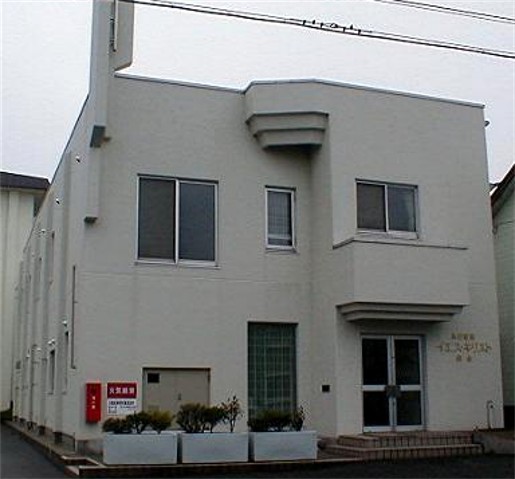
(map) This northernmost branch meetinghouse is about 20-minutes walk from the eki. This building was completed in 1984. Aomori is an important port city because of its proximity to Hakodate, the southern port city of Hokkaido. The Seikan Tunnel now joins Aomori and Hakodate with a rail line, replacing the renraku sen ferries that once linked those cities. The tunnel, which opened in 1988, is the world's longest railway tunnel at 53.85 kilometers. Construction on the Touhoku Shinkansen extension from Hachinohe to Shin-Aomori was completed in 2010, and is expected to be completed past Aomori through the tunnel to Hakodate by about 2016.
Aomori-ken Index
All-Mission Seven Prefecture Meetinghouse Index Map
|
|
|
|
|
|
|
|
 |
|
|
|
|
|
|
|
|
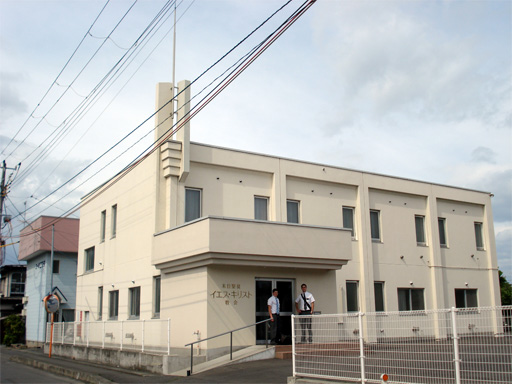
Hachinohe (map) shibu (branch) is one block from the Hon-Hachinohe eki and was dedicated 10 June 1984 (thanks to Glen Pope for submitting the date). This floor plan is fairly common in other areas of Japan, with the chapel on the second floor along with some classrooms, and a kitchen and more classrooms on the ground floor. Hachinohe is a port and industrial city of about 250,000.
Note: Hachinohe branch celebrated their 40th year on 29 Nov 2008. A lucky inclusion in the group picture is Kubota Koji Kyodai, who was an early pioneering leader in Hachinohe. Sadly, he passed away just a few months later, in April 2009.
|
|
|
|
|
|
 |
|
|
|
|
|
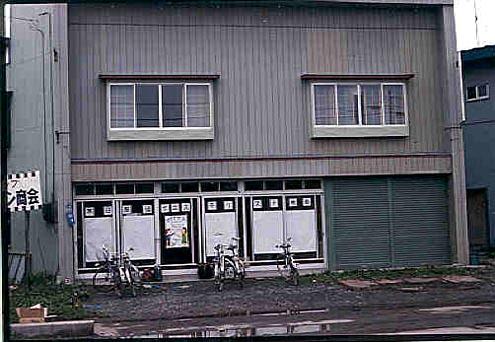
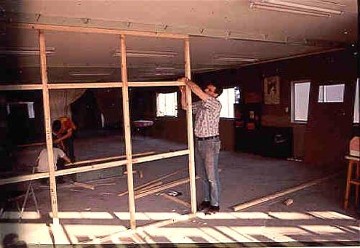
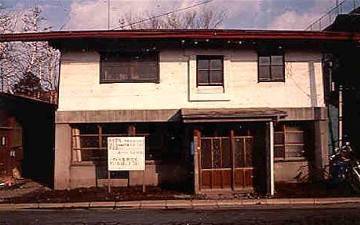
Historical Hachinohe branch at Numadate 1-2-20, near then-Branch President Kubota Kyoudai's house, and only a few blocks towards the pier from the built building location above. Elders quarters and branch president's office were located upstairs. Soon after we moved here in April 1975, this became a 6-man branch. Notice the fine fleet of morau'd bicycles poised in front of our home. Okay, so it didn't look so hot from the front, but we fixed it up pretty nicely on the inside--Rex Nelson showed us all that carpentry skill!! Go-kurousama! This was a wall to make the chapel a separate room.
Hachinohe shibu at Kamikazushi-chou 5, right off of the main drag at Aramachi--used until April 1975. This building had unusually thick walls (>1 ft. thick). Neither of these former meetinghouse buildings still stand.
|
|
|
|
|
|
|
|
 |
|
|
|
|
 |
|
Aomori-ken Index
All-Mission Seven Prefecture Meetinghouse Index Map
|
|
|
|
|
 |
|
|
|
|
|
|
|
|
Hirosaki's
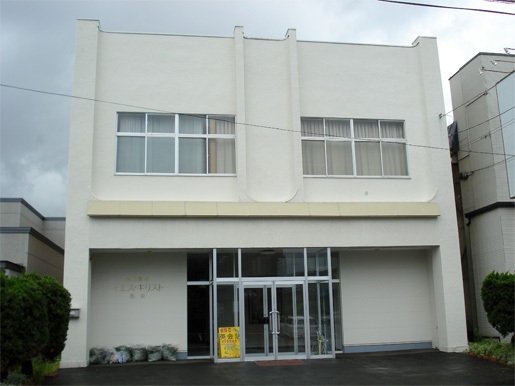
(map) church meetings are held in this building about a 10-minute walk behind the eki. This building was purchased in 1991 and the entrance was renovated in the mid 2000s, including removal of metal shutters, giving the building less of an industrial feel. Hirosaki is famous for its large park and castle grounds and sakura matsuri (cherry blossom festival) held there every year in late April. Aomori-ken is famous for its delicious apples; many orchards can be found in the area between Hirosaki and the city of Aomori.
Aomori-ken Index
All-Mission Seven Prefecture Meetinghouse Index Map
|
|
|
|
|
|
|
|
 |
|
|
|
|
|
|
|
|
Misawa's
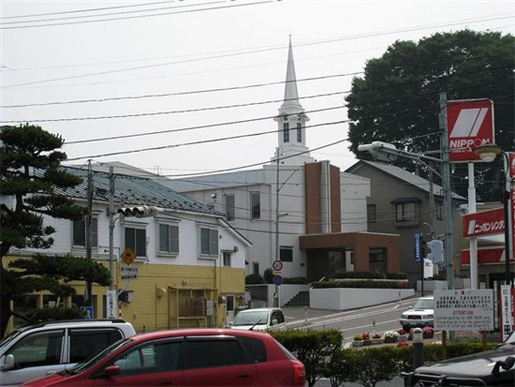
(map) church building is highly visible, directly across the street from the omote (main/front) entrance of the eki. The meetinghouse also serves an English-speaking military branch from the nearby US Air Base, for which Misawa is famous. The building was finished in 1986 and a remodeling/expansion was completed in 2008 to accommodate the large English-speaking branch from the base. Missionaries apparently started living in Misawa in the 1980s. This photo was taken from the eki by Aomori District Pres. Murakami, who also contributed more pictures of the remodeled building. I learned in July 2009 from President Tateoka that the Misawa apartment was closed due to the low number of Sendai Missionaries at the time. In 2012, I learned that two of the four elders living in Hachinohe commute by train to serve in Misawa.
Nearby Towada (population 66,000), which is located about 30 minutes from Misawa by local (non-JR) railway, had missionaries starting in 1979, according to Steven Ison (78-80), and a Japanese branch before Misawa had one, according to Arnold Stonebrink (82-83). Currently there are no missionaries living in or church meetings held in Towada, whose members now attend in Misawa.
Aomori-ken Index
All-Mission Seven Prefecture Meetinghouse Index Map
|
|
|
|
|
|
|
|
|
|