






Bridge
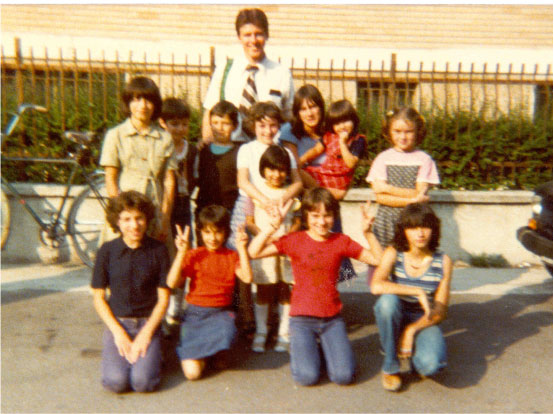
Brescia Friends '79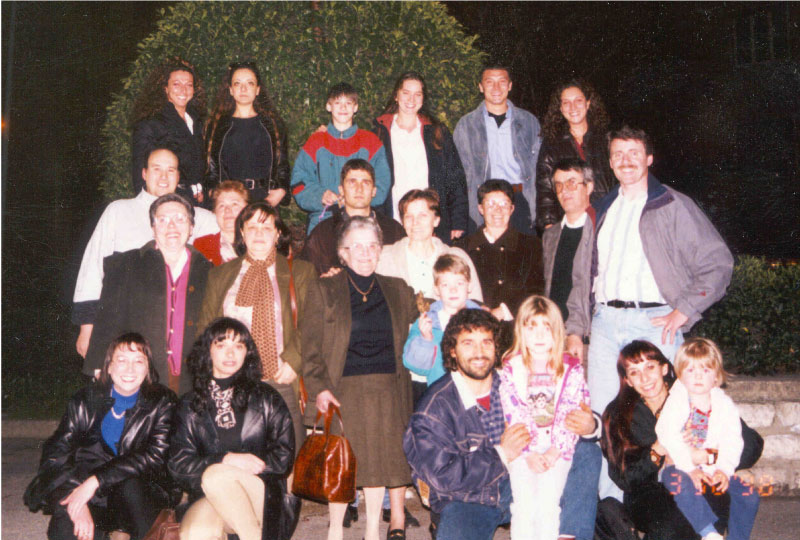
Brescia Friends '98
Brescia Friends '98

Galizio Family '98
Stairwell at Lago
di Garda '98

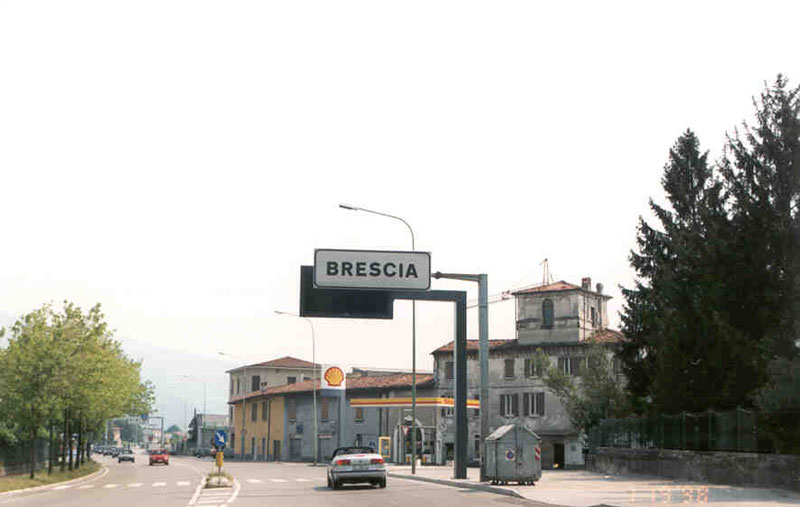
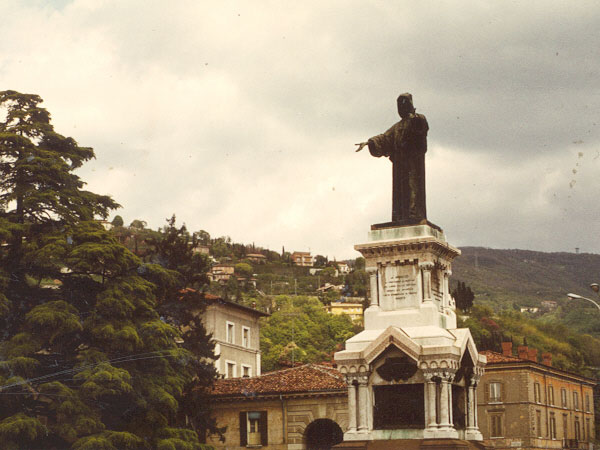
Brescia (LOMBARDIA) Situated at the edge of the Prealps 149 m. above sea-level on flat ground at the mouth of Valtrompia, Brescia has the second largest population in Lombardy. It was an important chief town of the local Gauls, then a Roman municipium called Brixia; after the Barbarian invasions it became a free municipality (12th century) within the Lombard League. From 1426, after the Pallavicini, Scaligeri, Torriani and Visconti Signorie, it went over to the Republic of Venice, remaining part of that until 1797, the year in which the Napoleonic Cisalpine Republic was declared. In 1814 Brescia became part of Lombard-Venetia under Hapsburg rule, from which it attempted in vain to break free under the leadership of Tito Speri, demonstrating admirable courage during the `Dieci Giornate di Brescia' - a last, desperate attempt at resistance. It is for this episode that the town is called `the Lioness of Italy'. It was finally liberated in 1859.
Monuments: The most important monuments stand in the oldest part of the town: Piazza della Loggia, a harmonious complex of Renaissance buildings, the Rotonda or Duomo Vecchio (Romanesque, 11th century), Duomo Nuovo (17th-18th century), Broletto (12th century) and Torre del Popolo (11th century tower), many Renaissance and 17th century buildings (Maggi, Ganassoni, Martinengo Cesaresco), the majestic remains of the Tempio Capitolino and Teatro Romano (1st century AD.). Together with a well-developed industrial sector (engineering, steel, food and textiles) the town's economy has a highly organized, busy commerce of the products of local industry and agricultural produce from the fertile surrounding area. Banking also has a certain importance together with tourism.
Events: Mercatino delle curiosità (curio market every last Saturday and Sunday of the month), international piano festival (April-June), opera season.
Famous People: Arnaldo da Brescia (political thinker and reformer, 12th century), Nicolò Fontana also known as `il Tartaglia' (mathematician, 1506-1557), Tito Speri (patriot, 1825-1853), Giuseppe Zanardelli (jurist, 1826-1903), Veronica Gambara (poetess, 1485-1550), `Il Romanino' (artist, 1484-1566).
Cultural Institutions: Archivio di Stato (state archives), Museo delle Armi (Arms Museum), Museo dell'Età Cristiana (Museum of the Christian Age), Pinacoteca Civica Tosio-Martinengo (includes paintings by Raffaello, L. Lotto, Romanino, Carracci, Veneziano), Museo Romano, Winged Victory statue, (1st century AD.), Museo del Risorgimento, libraries, university.
In the Province: Gardone Val Trompia (firearms manufacture), Vobarno (steel industry), Chiari (dairies), Sirmione (tourism), Desenzano del Garda (Museo della Battaglia-battle museum), Salò (`Museo Storico del Nastro Azzurro' foundation), Gardone Riviera (`Il Vittoriale degli Italiani' foundation), Capo di Ponte (Centro Camuno di Studi Preistorici-prehistoric study centre, antiquarium), Breno (Museo Civico Camuno-civic museum of the ancient inhabitants of Val Camonica), Lonato (Ugo da Como foundation), Ponte di Legno (tourism).
Bridge
Brescia Friends '79
Brescia Friends '98
Brescia Friends '98
Galizio Family '98
Stairwell at Lago
di Garda '98
| © Copyright 1996-2003 Italy Milan Mission Online. All Rights Reserved. Rights and Usage. Contact Information: IMMO Webmaster. This site (www.italymilanmission.com) has no legal relation to The Church of Jesus Christ of Latter-day Saints or its associated entities. | |
 |
|